Quick answer
As of October 23, 2026, 14 states have launched HEEHR rebates, but many are limited, paused or closed for single-family homes. Under DOE's May 2026 rules, HEEHR only pays to replace electric equipment, not gas, oil or propane. Check your state's official page and get approval before work starts.
As of late October 2026, only a handful of states have HEEHR rebates you can actually use, and most of those come with limits. The National Association of State Energy Officials (NASEO) lists 14 states with a HEEHR program launched, as of September 30, 2026. We checked each one on its own official page on October 23, 2026. Some are open under new rules, some are paused, and some have run out of money for single-family homes. Below is the status of HEEHR rebates by state, plus what changed on September 1, 2026. For how HEEHR works overall, see our heat pump rebates guide.
HEEHR in 3 lines
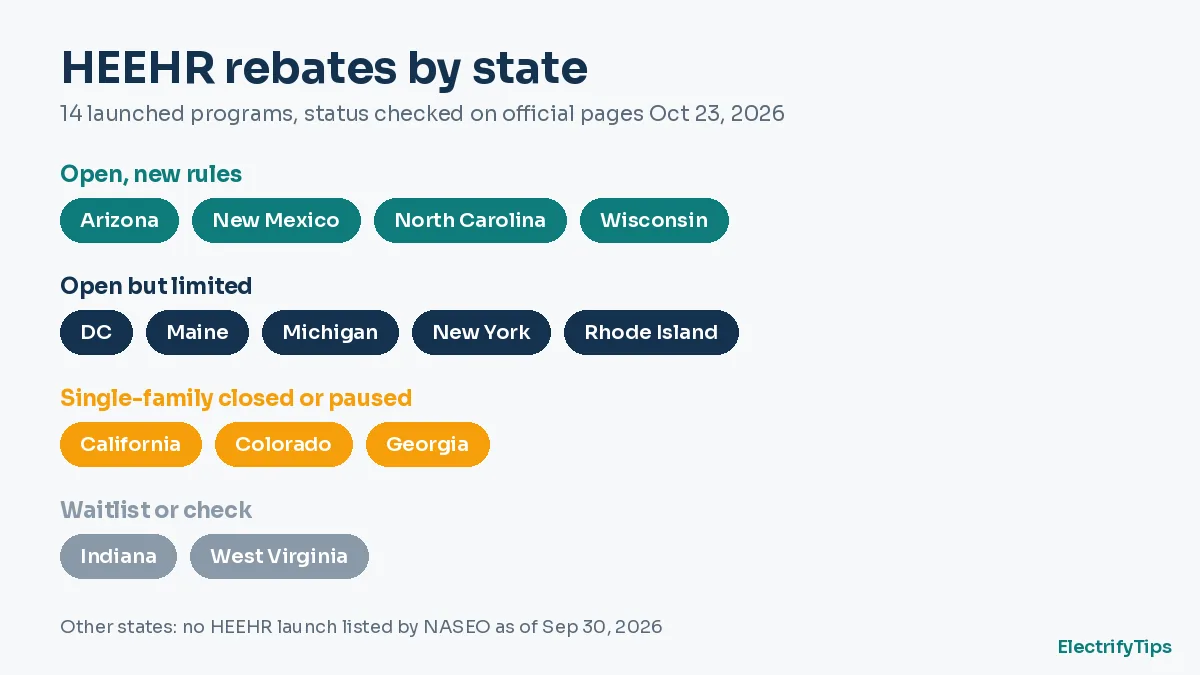
- What it is: the state-run federal rebate formerly called HEAR. The law allows up to $8,000 for a heat pump, with a $14,000 limit per household.
- Who can get it: households at 150% of area median income or less, with bigger rebates below 80%.
- What changed: since DOE’s May 29, 2026 notice, it only pays to replace existing electric equipment, not gas, oil or propane, and it can require insulation and air sealing first. States had to apply these rules within three months.
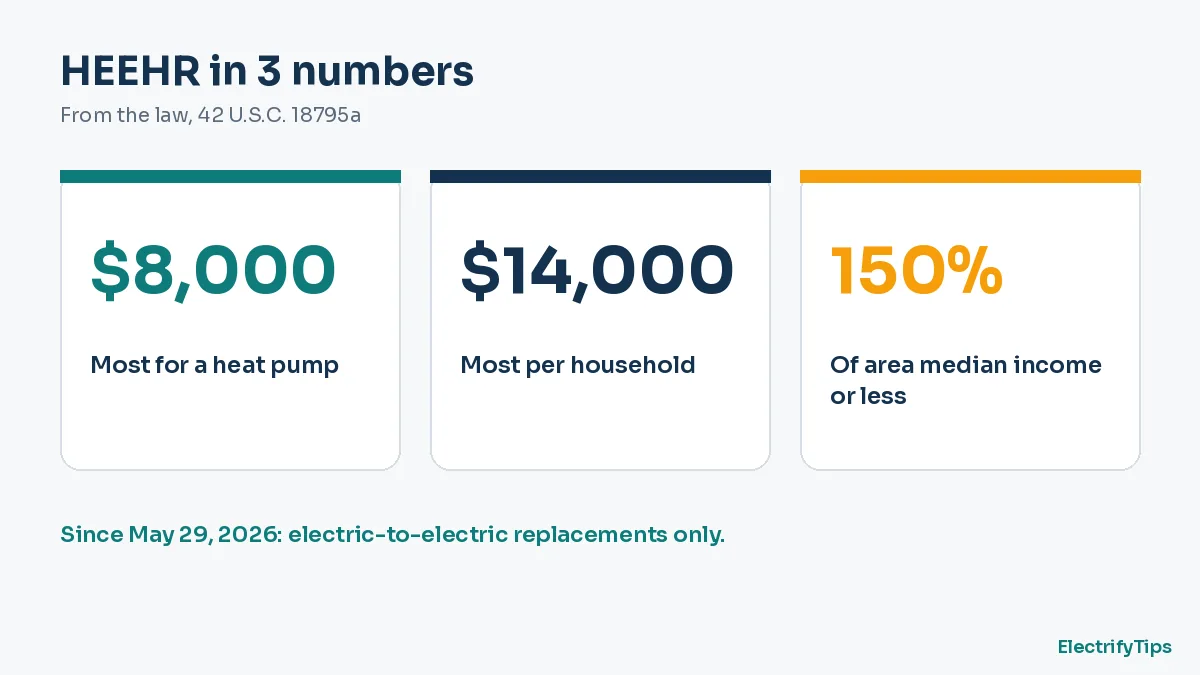
HEEHR rebates by state: status table
Status checked on each state’s official page on October 23, 2026. Click your state to confirm before you plan anything.
| State | Status | What the official page says |
|---|---|---|
| Arizona | Open, new rules | Applications are still accepted under the new guidelines. Since Sept 1, 2026, only electric-to-electric replacements. |
| California | Single-family full | Single-family rebates fully reserved statewide since Feb 24, 2026, with a waitlist. Multifamily listed as still available. |
| Colorado | Single-family closed | Single-family program closed in both regions. Small multifamily rebates “will be available in 2026”. |
| District of Columbia | Through DCSEU only | Federal rebates only through DCSEU’s affordable housing and home electrification programs, for low-income households. |
| Georgia | Paused, limited reopening | Paused since Aug 14, 2026. Reopening in October 2026 with limited funds: single-family wiring and panel upgrades only, alongside a HER project. |
| Indiana | Check with program | Two rebate offerings through one application. The page shows “Apply Now” but doesn’t state availability. |
| Maine | Open, narrow | Live for income-eligible manufactured (mobile) homes and new affordable multifamily buildings. |
| Michigan | Partly paused | New income-qualified applications paused in the Detroit, Warren, Grand Rapids, Lansing and Kalamazoo districts. |
| New Mexico | Open, in phases | Launched Sept 3, 2024. Not all products available yet. Ends about summer 2028 or when funds run out. |
| New York | Through EmPower+ | Owners of 1 to 4 unit homes with income below 80% of area median, through NYSERDA’s EmPower+ program. |
| North Carolina | Open, new rules | Since Sept 1, 2026, no fuel switching; electric-to-electric upgrades allowed; insulation and air sealing may be required. |
| Rhode Island | Limited pilot | Retail pathway pilot in 11 towns; LIHEAP households through local agencies. No rebates for switching from fossil fuel. |
| West Virginia | Waitlist | The state page offers a waitlist and says to sign up to “know when rebates launch”. |
| Wisconsin | Open, new rules | Since Sept 1, 2026, no retail rebates for equipment replacing fossil fuel appliances. See our Wisconsin heat pump rebates guide. |
Not launched yet (examples):
- Minnesota says its program “has not launched yet” and there is “no estimated program launch date” (update Oct 12, 2026).
- South Carolina says rebates “are not currently available but are expected to launch in 2026.”
Every other state: NASEO’s list shows no HEEHR launch as of September 30, 2026. Check your state energy office for news.
What changed on September 1, 2026
DOE’s May 2026 notice gave launched programs three months to change. Several states named September 1, 2026 as the switch date:
- No more fuel switching. Arizona, North Carolina, Rhode Island and Wisconsin no longer pay to replace gas or other fossil fuel equipment with a heat pump.
- Electric-to-electric is still allowed. If you heat with electric resistance today, a heat pump can still qualify.
- Insulation may come first. North Carolina says insulation and air sealing may be required alongside a heat pump project. Our guide to insulation before a heat pump explains why.

If you heat with gas, oil or propane, HEEHR is likely not the right program now. Look at utility rebates and the HOMES program in our rebates guide.
How to apply where HEEHR is open
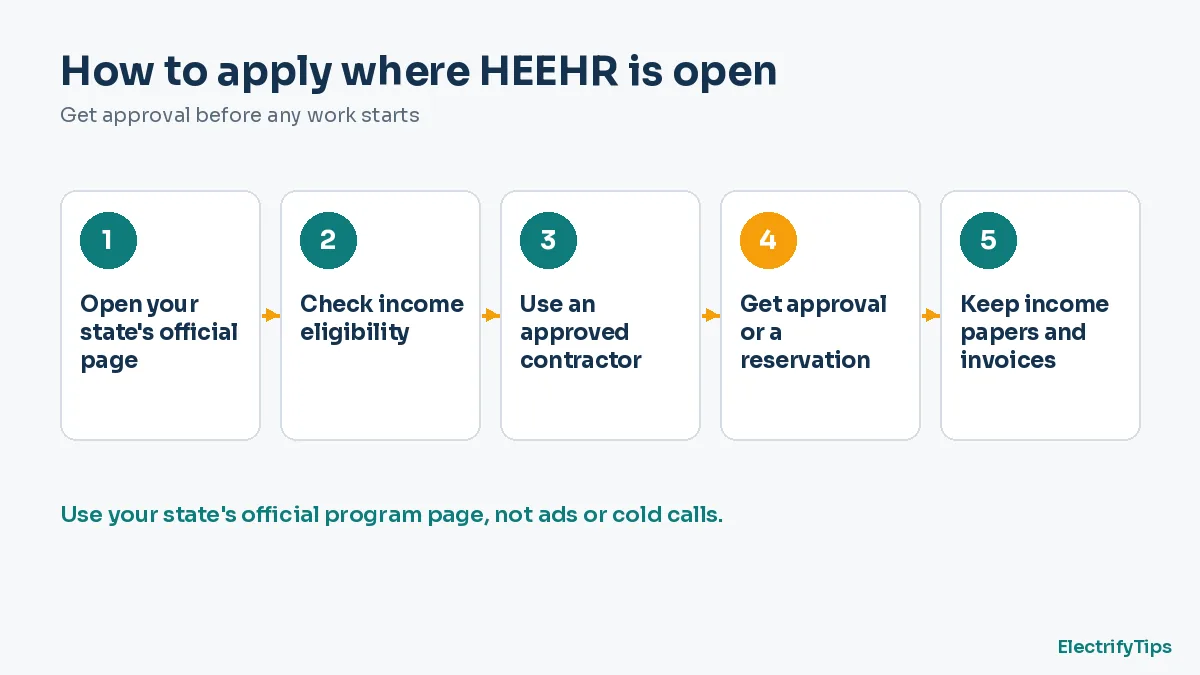
- Open your state’s official page from the table. Don’t use links from ads or unsolicited calls.
- Check income eligibility with the state’s tool or checklist.
- Use a contractor the program approves. Colorado and Wisconsin, for example, work through registered contractors.
- Get approval before work starts. Rhode Island, for example, says it must approve every application before you buy equipment. California and Colorado call this a reservation.
- Keep your paperwork: income documents, the approval or reservation, and the itemized invoice.
Getting quotes? Our guide on how to compare heat pump quotes helps you check that the rebate is applied correctly. For a rough cost before rebates, try the heat pump cost calculator.
If your state isn’t open
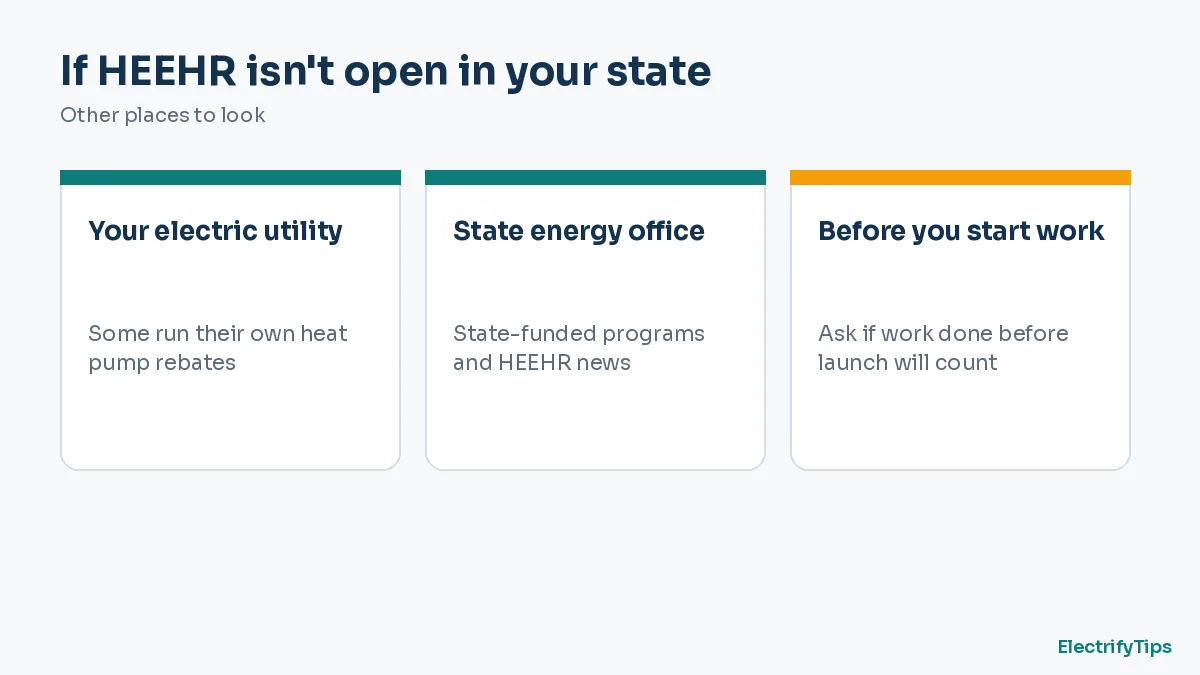
- Ask your electric utility about heat pump rebates. Some run their own.
- Check your state energy office for state-funded programs.
- If HEEHR may open later in your state, ask the state energy office whether work started before launch will count before you go ahead.
We re-check this table every month. Status changes fast, so always confirm on your state’s page before you sign a contract.
Sources & references